Your Fenced Backyard Isn't as Safe as You Think — Here's What's Actually Hiding Out There
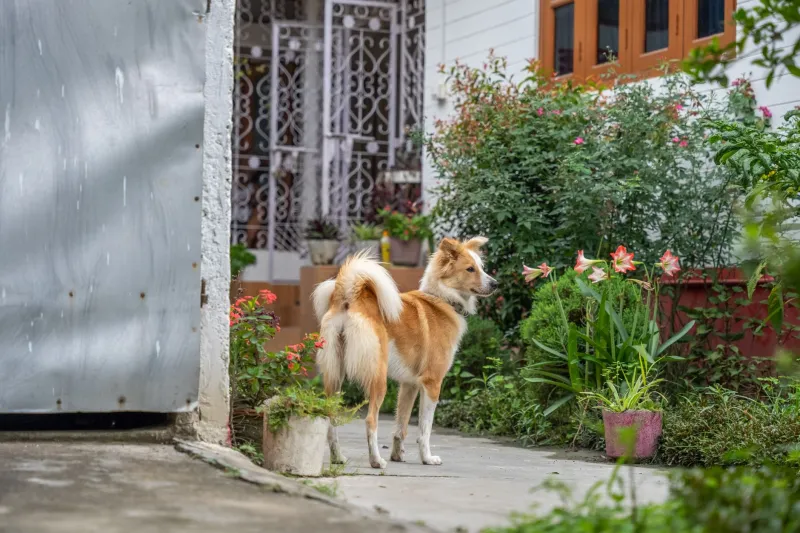
There's a particular kind of confidence that comes with a fenced yard. You let the dog out, you hear the latch click, and you pour your coffee without worrying. The fence is doing its job. What could go wrong?
Quite a bit, as it turns out.
Fenced backyards give pet owners a real sense of security — and that security, when it's slightly misplaced, is actually part of what makes yards dangerous. Because we stop looking. We stop auditing. We assume the space is safe because it's ours, and because it's contained.
The reality is that a typical American backyard, even a well-maintained one, can contain a surprising number of genuine threats to pets. Some are obvious in retrospect. Others are genuinely unexpected. Here's a honest look at what's actually out there — and what you can do about it.
The Plant Problem Is Bigger Than You Think
Most pet owners know that some plants are toxic to animals. Fewer realize just how many common landscaping choices make the hazard list — or that the ASPCA's toxic plant database includes over 400 species.
The usual suspects show up in backyards across the country: azaleas and rhododendrons (extremely common in the Southeast and Pacific Northwest, and genuinely dangerous to both dogs and cats), sago palms (wildly popular in Southern landscaping, and one of the most toxic plants known to affect pets — even small ingestions can cause fatal liver failure), oleander (common in California, Texas, and Florida), and autumn crocus (a fall-blooming bulb plant that causes multi-organ failure).
But the toxicity problem isn't just about what you planted. It's about what grew on its own. Volunteer plants — the ones that sprout along fences, in garden beds, and at the edges of lawns — often include wild mushrooms, pokeweed, nightshade, and other species that most homeowners don't recognize as hazardous. Mushroom identification is notoriously difficult even for experts, and several toxic species are visually indistinguishable from harmless ones.
If you haven't done a deliberate plant audit of your yard with a toxic species list in hand, it's worth an afternoon.
Soil and Lawn Chemicals: The Invisible Contamination Layer
The ground itself can be a source of risk, and this one surprises a lot of people.
Pesticides, herbicides, and synthetic fertilizers applied to lawns and gardens don't disappear after they dry. Many persist in soil for weeks or months, and pets who walk through treated areas and then groom themselves are ingesting residues regularly. 2,4-D, one of the most widely used broadleaf herbicides in the US, has been associated with bladder cancer in dogs in several studies — though the research is ongoing and the relationship isn't fully established.
More immediately: if you live in an older neighborhood, your soil may contain elevated lead levels from decades of leaded paint and leaded gasoline. A soil test — available cheaply through most county extension offices — can tell you what's actually in the ground your dog is digging and rolling in.
Neighbors' yards matter too. Herbicide and pesticide drift from adjacent properties is real, particularly on windy days. If your neighbor treats their lawn and your dog runs the fence line regularly, that's a meaningful exposure pathway.
The Fence Itself: More Escape Routes Than You Realize
Fences fail in ways that owners rarely anticipate until a pet goes missing.
The most common issue isn't a broken board or a gate left open — it's gaps at ground level that owners don't notice because they're not looking from a small dog's or cat's perspective. A six-inch gap at the base of a fence that's been undermined by rain or soil settling is invisible from standing height and completely obvious from six inches off the ground.
Dogs who are motivated to escape — by a squirrel, a noise, anxiety, or boredom — are remarkably creative. Fence climbing is more common than most owners expect, particularly in athletic breeds. Some dogs dig under fences methodically, especially along fence lines where the soil is looser. A fence that has never been tested by a determined dog may not have been tested at all.
Periodic fence audits — walking the entire perimeter at ground level, checking for gaps, soft soil, loose boards, and climbable structures nearby (think: woodpiles, AC units, or patio furniture placed too close to the fence line) — are a basic but genuinely important safety practice.
Wildlife: The Hazards That Come to You
A fenced yard doesn't keep wildlife out. Raccoons, opossums, skunks, coyotes (increasingly common in suburban areas across most of the US), and snakes all navigate fences routinely. Coyote attacks on small dogs and cats in fenced yards are documented regularly across the country, including in dense suburban neighborhoods.
Wildlife that enters your yard also brings disease risk. Raccoon roundworm (Baylisascaris procyonis) is shed in raccoon feces and can cause severe neurological disease in dogs who sniff or eat contaminated soil or feces. Leptospirosis — a bacterial infection that can cause kidney and liver failure — is spread through the urine of infected wildlife including raccoons, opossums, and rodents. Standing water in yards after rain creates an ideal transmission environment.
Bird feeders and birdbaths, beloved by many homeowners, reliably attract rodents and the predators that eat them — and create congregation points that increase wildlife-pet contact.
Common Yard Modifications That Backfire
Some popular yard upgrades create new risks while solving old ones. Artificial turf, for example, eliminates pesticide concerns and muddy paws — but retains heat dramatically in summer, reaching surface temperatures that can burn paw pads on hot days. It also requires regular disinfection to prevent bacterial buildup.
Decorative gravel and river rock are popular in xeriscaping but can cause paw injuries in dogs who run on them, and some dogs ingest rocks compulsively, leading to gastrointestinal blockages.
Compost bins — even covered ones — are attractive to dogs and can contain mold toxins (particularly penitrem A, produced by certain molds in decomposing food) that cause severe neurological symptoms.
A Practical Safety Checklist
Here's a starting framework for auditing your yard:
- Walk the perimeter at pet height. Look for gaps, soft soil, climbable structures.
- Identify every plant in the yard and cross-reference against the ASPCA toxic plant list.
- Get a soil test if you live in a pre-1980s neighborhood or if the yard has a history of heavy chemical use.
- Review your lawn treatment products and establish a re-entry interval before letting pets back outside.
- Eliminate standing water after rain to reduce leptospirosis risk.
- Secure or relocate compost bins away from pet access areas.
- Consider a coyote roller on fence tops if you're in a coyote-active area (they're more common than you'd think).
- Check for wild mushrooms after rain, particularly in shaded areas.
When a Yard Is Genuinely Unsafe
Sometimes the honest answer is that a yard isn't appropriate for unsupervised pet access — at least not yet. A yard adjacent to a coyote corridor, heavily contaminated soil, or a fence in serious disrepair may require real remediation before it's safe for a pet to use alone.
That's not a failure. It's just information. Supervised outdoor time in an imperfect yard is almost always safer than unsupervised time in one with unaddressed hazards. And most of the risks described here are fixable — they just require knowing they exist in the first place.