Inside Cat or Outside Cat? The Real Health Trade-Offs (And How to Make Either Work)
Ask a room full of cat owners whether their cats should be indoors or outdoors and you'll get a passionate debate. Animal welfare organizations generally advocate firmly for the indoors. Plenty of cat owners push back, arguing that their cats are miserable cooped up inside. And somewhere in the middle, actual cats are living their lives with varying degrees of risk and enrichment.
The truth is messier than either camp likes to admit. Both indoor and outdoor lifestyles carry real health trade-offs, and the conversation deserves more nuance than a simple "keep them inside" directive. Let's look at what the evidence actually shows — and what you can do to protect your cat regardless of your setup.
The Case for Indoors: Real Risks, Real Numbers
The statistics in favor of indoor living are not made up. Outdoor cats in the United States face a genuinely more dangerous world than their housebound counterparts. The American Veterinary Medical Association and numerous shelter organizations cite dramatically shorter average lifespans for outdoor cats — estimates range from 2–5 years for outdoor-only cats compared to 12–18 years for indoor cats, though these numbers vary widely by region and individual circumstances.
The risks driving that gap are real and varied:
Vehicle strikes are among the leading causes of traumatic injury and death in outdoor cats, particularly in suburban environments where traffic is heavy but not as obviously dangerous as a highway.
Infectious disease exposure increases significantly outdoors. Feline leukemia virus (FeLV), feline immunodeficiency virus (FIV), and upper respiratory infections spread through contact with other cats — and outdoor cats meet a lot of other cats. Even vaccinated cats aren't fully protected against all strains.
Predation and territorial injuries are common in many parts of the country. Coyotes, in particular, have expanded their range significantly across suburban and even urban America and are well-documented predators of domestic cats.
Parasites — fleas, ticks, intestinal worms, and heartworm — are all substantially more common in outdoor cats, and some of these carry serious long-term health consequences.
These aren't arguments to dismiss. They're real risks that deserve real consideration.
The Case for Outdoors (Or At Least, Against Pure Confinement): What Indoor Life Can Cost
Here's the part that often gets left out of the conversation: indoor-only life carries its own set of documented health risks, particularly for cats who weren't raised indoors from kittenhood or who have high activity and exploration drives.
Obesity is epidemic in indoor cats. The Association for Pet Obesity Prevention consistently finds that a majority of American cats are overweight or obese, and sedentary indoor lifestyles are a major contributing factor. Feline obesity is linked to diabetes, joint disease, urinary tract problems, and shortened lifespan — ironically, some of the same outcomes the indoor lifestyle is supposed to prevent.
Stress and behavioral disorders are significantly more common in indoor cats, especially in multi-cat households. Chronic stress in cats isn't just a quality-of-life issue — it has real physiological consequences. Feline idiopathic cystitis (FIC), a painful and recurring bladder condition, is strongly associated with stress and is far more common in indoor cats. Overgrooming, aggression, and anxiety-related behaviors are also more prevalent.
Boredom and understimulation matter more than many owners realize. Cats are hunters by instinct, and a life with no opportunity to stalk, pounce, climb, or explore can create genuine psychological strain. A 2021 survey of cat welfare researchers found that environmental enrichment was consistently underutilized in indoor cat households, even among owners who considered themselves attentive caregivers.
Harm Reduction for Outdoor Cats
If your cat goes outside — whether by choice or because you've made a considered decision that it's right for your animal — there are concrete steps you can take to reduce the most serious risks.
Keep vaccinations current. FeLV and FIV vaccines aren't perfect, but they provide meaningful protection. Rabies vaccination is not optional — it's legally required in most US states for a reason.
Use consistent parasite prevention. Talk to your vet about flea, tick, and heartworm prevention products appropriate for outdoor cats. Don't skip this.
Microchip and ID your cat. A breakaway collar with an ID tag and a registered microchip dramatically improves the odds of a lost outdoor cat coming home. GPS cat trackers like the Tractive GPS Cat LTE are increasingly practical options for cats who roam.
Consider time-restricted outdoor access. Many cat owners find that limiting outdoor time to daylight hours, particularly avoiding dusk and dawn when predators are most active, meaningfully reduces risk without eliminating outdoor access entirely.
Neuter or spay. Intact cats roam further, fight more, and face significantly higher disease exposure. This one is non-negotiable from a harm-reduction standpoint.
Enrichment Solutions for Indoor Cats
If your cat lives primarily or entirely indoors, the goal is to create an environment that meets their behavioral needs — not just their physical ones.
Vertical space is critical. Cats feel safer and more stimulated when they can climb and survey their environment from height. Cat trees, wall-mounted shelves, and window perches aren't luxuries — they're behavioral necessities, especially in multi-cat homes.
Interactive play is non-negotiable. Wand toys, puzzle feeders, and scheduled play sessions that mimic hunting behavior help discharge the predatory energy that would otherwise have nowhere to go. Aim for at least two dedicated 10–15 minute play sessions per day.
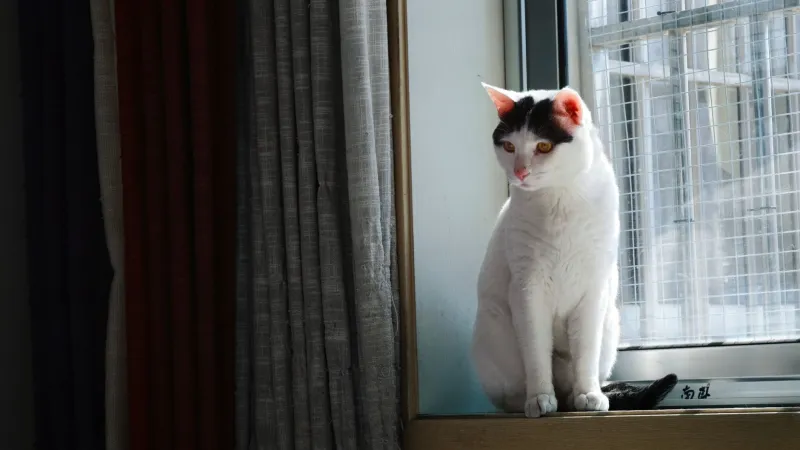
Window access and bird feeders. A window with a view — especially one positioned near a bird feeder — provides low-effort enrichment that cats find genuinely engaging. "Cat TV" is a real thing, and it works.
Consider a catio. Enclosed outdoor structures, or "catios," have exploded in popularity among US cat owners and offer a genuine middle ground: fresh air, outdoor sights and smells, and some degree of natural stimulation, all without the predation, traffic, and disease risks of free roaming. DIY options are affordable, and pre-built kits are widely available.
The Hybrid Approach
For many cats and owners, the best answer isn't a binary one. Leash training, while it requires patience and works better with some cats than others, is a legitimate option that gives cats supervised outdoor exposure. Catios provide enrichment without free-roaming risk. Time-limited supervised yard access is another middle path that many owners find workable.
The honest answer is that there's no universally correct choice here. A highly active, previously outdoor cat forced to live in a small apartment faces real welfare costs. A cat in a neighborhood with dense coyote activity or heavy traffic faces real safety costs if allowed to roam. Your job as an owner is to assess your specific cat, your specific environment, and make the most informed, harm-reducing decision you can.
What's not acceptable is ignoring the risks on either side of the equation.